Product Launch | American Club | Bangalore
HEBBAL, BENGALURU · 5 HOURS · 250 · OCTOBER 2026 · BY SHARATH B B
 01
 02
 03
 04
 05
 06
 07
 08
 09
 10
 11
 12
 13
 14
 15
 16
 17
 18
 19
 20
 21
 22
 23
 24
The outcome metric we build every product launch toward is message recall — the share of the room that leaves able to repeat what the product does and why it matters. For the launch at the American Club, Bangalore, BeyondXP treated it as an engineered experience, not a show you wing on the day: a clear message spine, a room designed around the reveal, and production that holds up under live pressure. If most of the audience can repeat the core message on the way home, the launch worked. If they can't, nothing else in the plan matters. Everything we build — staging, pacing, technical cues, rehearsals — exists to move that one number.
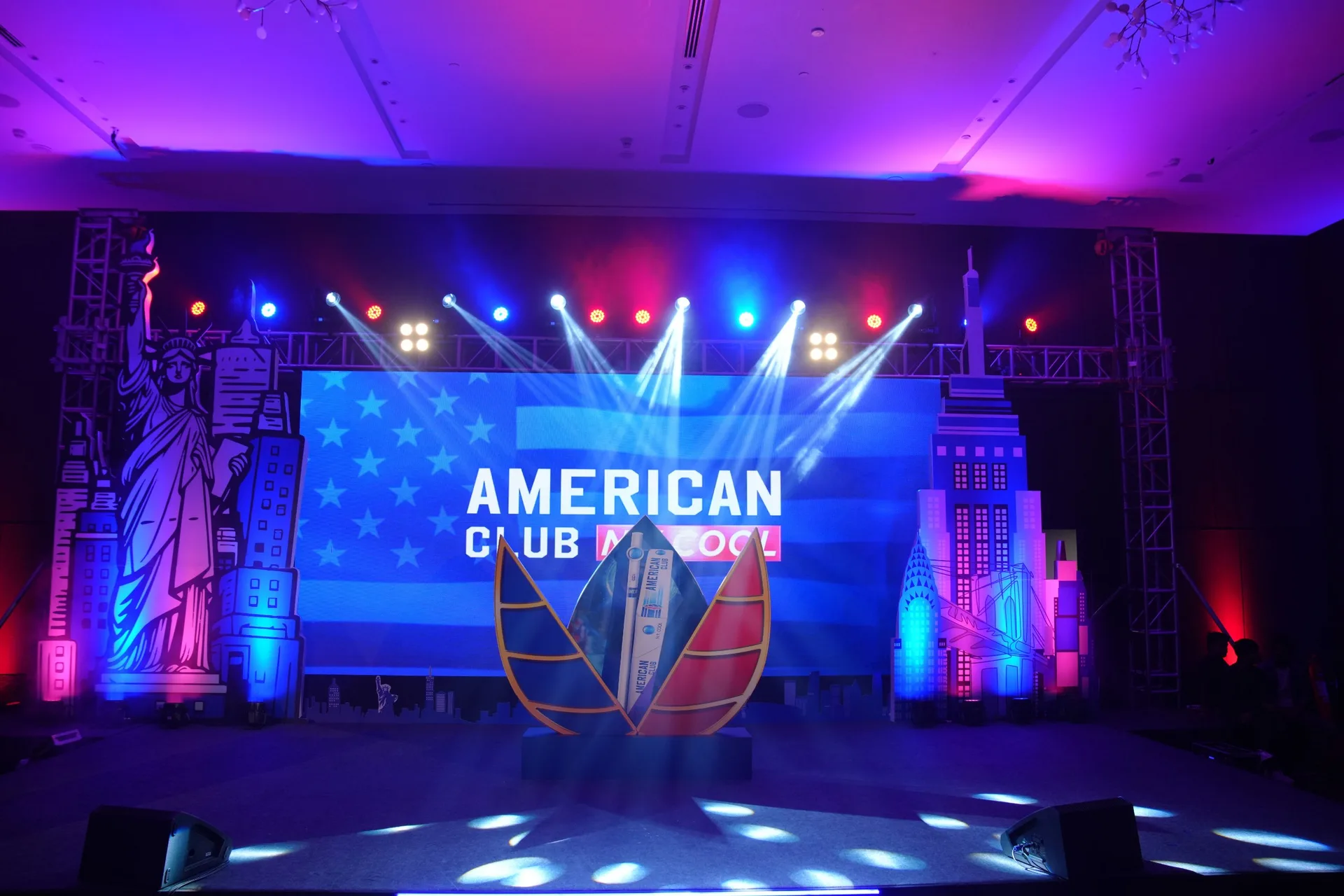
A product launch is the one moment where strategy, story and staging have to arrive at the same time. Get it right and the audience leaves able to repeat what the product does and why it matters. Get it wrong and the best product in the category disappears into a flat room. For the product launch at the American Club, Bangalore, BeyondXP treated the brief as something engineered, not improvised — built backwards from the message, not forwards from a venue booking.
What makes a product launch work?
The difference between a launch that lands and one that fades is rarely budget. It is clarity. A launch works when there is a single message spine running through every element — the invitation, the reveal, the demo, the words on stage, the moment people pull out their phones. When those elements point in the same direction, the room does the amplification for you.
When they don't, the audience is left assembling the story themselves, and most won't bother. So the first job on any launch is not the stage design. It is deciding the one thing the room must remember, then ruthlessly building everything to serve it. That single idea became the test we ran every creative and technical decision through at the American Club.
- A clear message spine the whole event hangs from
- A reveal designed as a moment, not a slide
- A run of show rehearsed until it is boring to the crew
- Production that holds up under live pressure, with no single point of failure
How BeyondXP engineers a launch
Our approach starts with the reveal and works outward. We ask what the audience should feel at the moment the product appears, then reverse-engineer the staging, pacing and technical cues to deliver exactly that. The reveal is the hinge the entire event turns on, so it gets planned, built and rehearsed first — not last.
From there we layer in the practical discipline that keeps a live moment from unravelling: a run of show tight enough that everyone knows their cue, contingency built into the technical rig, and rehearsals that treat the dress run as the real thing. A product launch has a fixed date that cannot move, which means every decision is made against a countdown. That pressure is exactly why the work has to be engineered rather than assembled on instinct.
It also means the detail matters more than usual. The moment a demo stalls or an audio cue lands late, the audience stops watching the product and starts watching the production. Our job is to make the production invisible so the product is the only thing in the room worth looking at — and at the American Club, that invisibility was the whole point.
How do you measure a product launch?
We measure a launch against one outcome metric: message recall — the share of the room that leaves able to repeat what the product does and why it matters. It is deliberately simple, because it is the only number that tells you whether the message survived the journey home. Every creative and technical choice — the reveal, the pacing, the words on stage — is made to push that figure up. If most of the audience can say what the product does and why it matters on the way out, the launch worked. If they can't, nothing else in the plan counts.
Why the moment is worth the effort
A launch is a rare thing: a concentrated window of attention where the people you most want to reach are all looking in the same direction at the same time. You don't get that often, and you don't get it back. Spending that attention on a vague story or a fragile set-up is the most expensive mistake a launch can make.
That is why we build launches as experiences people can carry out of the room and repeat — because a message that survives the journey home is the one that actually moves a product. The outcome we measure ourselves against is exactly that: how much of the room leaves able to say what the product does and why it matters. See how we think about this across our work, or start a conversation about our services if you have a launch on the horizon. For more on how we build live moments, read our insights.
The short version: a product launch is too important to leave to the day itself. Engineer the message, design the reveal, rehearse the pressure out, and let the room do the rest.
What is a product launch event?
A product launch event is a live or hybrid moment built to introduce a product to the people who matter — press, partners, customers or internal teams — and to make its core message impossible to miss. Done well, it combines a tight narrative, a designed reveal, and production that runs cleanly from first cue to last.
How far ahead should a product launch be planned?
The earlier the better. A product launch has a fixed, non-negotiable date, so the production, messaging and logistics all have to be engineered backwards from that moment. Starting early gives you room to rehearse the reveal, pressure-test the run of show, and remove risk before the room fills up.
How do you measure whether a product launch worked?
We hold a launch to a single outcome metric: message recall — the share of the audience who leave able to repeat what the product does and why it matters. A message that survives the journey home is the one that actually moves a product, so everything in the plan exists to serve that one number.
Let's build yours.
Tell us what you're staging. We'll come back with a scope, a number, and a date.